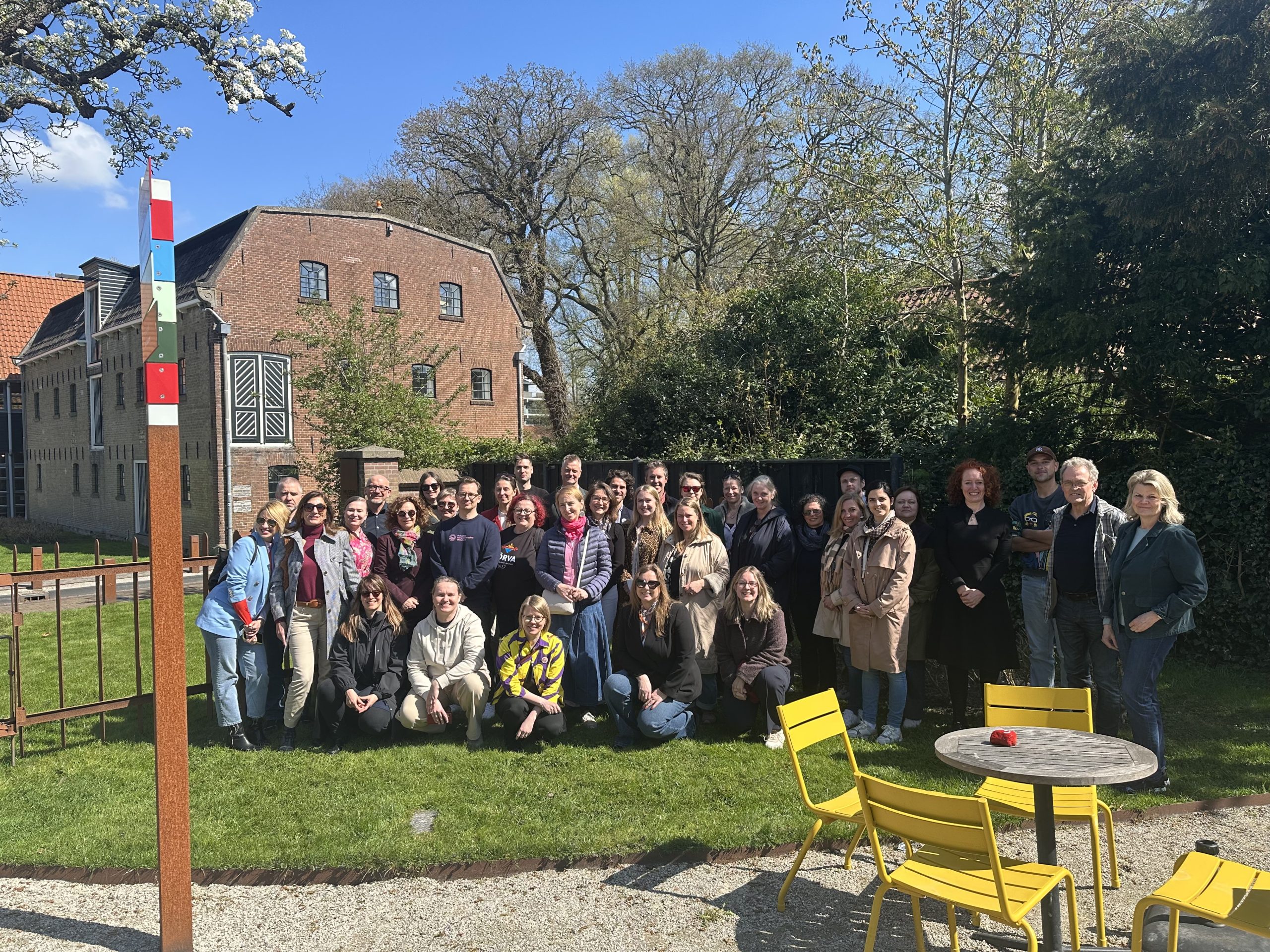
Around 40 participants and key stakeholders from current, former and future European Capitals of Culture (ECoC) gathered in Leeuwarden from 13 to 15 April 2026 for the ECoC Echo knowledge exchange seminar. Through a combination of expert presentations, discussions and site visits across Fryslân, participants deepened their understanding of how cultural heritage can be built and sustained beyond the title year.
The study visit, part of the Interreg Europe ECoC Echo project, focused on the long-term impact of Leeuwarden-Fryslân 2018 and its continuation through the Arcadia programme, providing valuable insights for cities and regions across Europe.
Participants were officially welcomed by the Mayor of Leeuwarden, Sybrand Buma, who reflected on the long-term effects of the ECoC title and the legacy of the Arcadia programme for the city, as well as the importance of sustained investment in culture and collaboration between communities, institutions and public authorities. The study visit further reinforced the idea that the success of the ECoC programme lies not only in the title year, but also in the networks and shared ownership it creates.
From Launching to Sustaining Legacy
The main programme guided participants through the region, combining strategic reflections with practical examples. At De Sluisfabriek in Drachten, sessions focused on initiating legacy. Imi Jonkman presented the development of the Arcadia programme as a continuation of Leeuwarden-Fryslân 2018, highlighting its organisational structure, values and long-term ambitions. Former alderman Sjoerd Feitsma and Mayor Fred Veenstra offered insights into regional and institutional perspectives.
A central theme of the seminar was “mienskip” – the Frisian concept of community. In her interactive session, Tamara Schoppert demonstrated how local ownership of projects serves as a key driver of success. During the afternoon at the Joure Museum, the focus shifted to sustaining legacy over time. Speakers, including alderman Jan Dijkstra, Bouwe de Boer, Livje Krol and Erik Fledderus, shared experiences ranging from community-led initiatives to long-term branding strategies and forward-looking regional development.
On the final day, Jan van Erve emphasised the importance of building strong and lasting partnerships, highlighting trust and shared ownership as the key foundations of sustainable cultural heritage. Participants exchanged lessons learned and identified shared challenges and opportunities in building sustainable cultural legacies across Europe.
Experiencing Legacy on the Ground
In addition to seminar sessions, participants explored Fryslân through site visits and informal exchanges. Visits to Drachten and Joure demonstrated how cultural initiatives are rooted in local communities, while shared travel and dinners created space for deeper dialogue and knowledge exchange.
The Leeuwarden edition of the ECoC Echo seminar showed that legacy is not a fixed outcome, but a continuous process shaped by collaboration and community. The event contributed to strengthening a network of European regions working together to extend the impact of the ECoC experience far beyond the title year.
About the Arcadia Programme
Arcadia is the legacy programme of Leeuwarden-Fryslân 2018, European Capital of Culture. Every three years, Arcadia organises a 100-day cultural programme across the province of Fryslân, using art and culture to address contemporary social issues and connect people, ideas and generations.
About the ECoC Echo Project
ECoC Echo is a project within the Interreg Europe programme that brings together former, current and future European Capitals of Culture. The aim of the project is to improve policies and practices related to cultural heritage, ensuring that the impact of the ECoC title lasts far beyond the title year itself. Through the exchange of knowledge and experience, partners work together to strengthen the role of culture in regional development across Europe. Project participants include: Leeuwarden 2018 (Netherlands), Novi Sad 2022 (Serbia), Veszprém 2023 (Hungary), Tartu 2024 (Estonia), Chemnitz 2025 (Germany), Oulu 2026 (Finland), Liepāja 2027 (Latvia), Évora 2027 (Portugal) and Bourges 2028 (France).